The folder labeled "mock visit" on the shared drive is usually last cycle's interview list, a stack of PDFs that no longer match the submitted packet, and a note that says "do this a year out." That note was written for a visit model some of you no longer have. A mock site visit is a rehearsal of a real survey day against the documents that body will actually read. It is not a second self-study, and it is not one calendar that works for every accreditor.
This guide is the operational protocol for GME and UME accreditation leads and coordinators: who owns the mock, how far before your visit it can run, which documents to freeze, and the interview and document failure points the rehearsal is for. A downloadable checklist (branded Excel, with a plain-CSV alternative) is linked at the end as a meeting handoff, not as the system of record.
Verified September 1, 2026 against ACGME, COCA, AVMA COE, and LCME site-visit pages. Sources at the end.
Who owns it
The expensive failure is not usually ignorance of the standards. It is a rehearsal that nobody owns, run against a packet that is still being edited.
| Owner | Clock | Artifact | Failure if skipped |
|---|---|---|---|
| Accreditation lead who names the body | Before any rehearsal is scheduled | Named body and visit type on row one | A year-out mock imported onto an ACGME program visit with approximately 30 days of notice |
| Named mock owner (accreditation lead, DIO, or coordinator who already owns the real visit) | Freeze date set before invitations go out | Freeze date, interview roster, agenda, and debrief | A rehearsal that nobody owns |
| Document-freeze owner who can stop edits | Body's freeze: ACGME ADS due date in the announcement letter; LCME packet as submitted; COCA 90 days before; AVMA COE FAQ six weeks (confirm in writing) | Frozen packet the surveyors will hold | The mock rehearses a different program than the one they will review |
| Interview-roster owner | After freeze, before mock day | Roster built to that body's published rules | Wrong people in the room (a chief past required years; a dean-picked student panel) |
A named mock owner. Usually the accreditation lead, DIO, or institutional/program coordinator who already owns the real visit logistics. This person owns the freeze date, the interview roster, the agenda, and the debrief. If this role is somebody's fifth job, the checklist below is fiction.
A document-freeze owner. Someone who can stop edits. For ACGME that is whoever can lock ADS uploads by the due date in the Site Visit Announcement letter. For LCME, the DCI/self-study/ISA packet as submitted. For COCA, the self-study in the electronic accreditation system. For AVMA COE, the self-study sent to the site team. After freeze, new evidence goes on a parking list for the debrief, not into the packet the mock team is reading.
An interview-roster owner. Builds the list to that body's published rules, not to who is free that afternoon.
The dean or DIO's visible sponsorship. Interviewees skip optional rehearsals. A kickoff that names the freeze date and the roster is worth more than a slide deck about "readiness."
When the freeze can run
Do not import one body's lead time onto another. Name the body. Then plan against that body's published clock, not a universal year-out calendar.
| Body | Notice/freeze | What it is not |
|---|---|---|
| ACGME programs | The minimum notice for all accreditation or recognition site visits is approximately 30 days. ADS freeze due date is in the Site Visit Announcement letter. | A year-out mock. The ACGME discontinued the program 10-Year Accreditation Site Visit, effective October 2023. |
| ACGME Sponsoring Institutions | All Sponsoring Institutions undergo a 10-Year Accreditation Site Visit. Confirm the announcement-letter list. Self-Study not monitored as of July 1, 2025. | A Self-Study interview Field Representatives have been told not to run. |
| LCME | Next-visit date lives in LCME correspondence. Freeze the DCI/self-study/ISA as submitted. An LCME-hosted article describes established MD programs as typically undergoing a full survey every eight years. | That typical interval used as your date. A GME year-out calendar imported onto a scheduled survey. |
| COCA | COCA staff will contact a college of osteopathic medicine approximately 12 months before the anticipated comprehensive site visit. Self-studies must be submitted no later than 90 days before the site visit begins. | New materials on visit day without Team Chair approval. |
| AVMA COE | A given school has a COE site visit at not more than a seven-year interval. The COE FAQs page fetched for this guide says the self-study is presented to the site visit team no later than six weeks before the visit. Confirm the filing date that binds your visit in writing. | A filing date copied from a P&P PDF you have not opened this cycle. |
ACGME programs. The ACGME discontinued the program 10-Year Accreditation Site Visit, effective October 2023. Programs on Continued Accreditation statuses can still be selected for a site visit through a random sampling process; programs are eligible if they have not had a site visit in nine years or more. Review Committees can also request a visit after annual data review, at the end of Initial Accreditation, for probationary status, or for a complaint. The minimum notice for all accreditation or recognition site visits is approximately 30 days. A mock that waits for "a year before accreditation" is a protocol written for a visit you will not be told about a year ahead.
ACGME Sponsoring Institutions. All Sponsoring Institutions undergo a 10-Year Accreditation Site Visit. That institutional visit is still on the books. Effective July 1, 2025, the Self-Study requirements for Sponsoring Institutions (Institutional Requirement 1.5) and programs (Common Program Requirement 5.5.h) are no longer being monitored: Accreditation Field Representatives and Review Committees will not ask for or review any information related to those requirements. The 2026 Institutional Requirements PDF still prints 1.5 as a Core requirement. Confirm with Field Activities and your institutional coordinator which documents the announcement letter actually asks for. Do not rehearse a Self-Study interview that Field Representatives have been told not to run.
LCME. An LCME-hosted Academic Medicine article describes established MD programs as typically undergoing a full survey every eight years. The school completes the Data Collection Instrument (DCI) and a self-study, submitted together; an LCME survey team reviews that packet and conducts a several-day long visit. As of March 9, 2026, LCME publications are not located on one page: school and survey-team documents live under the Schools and Survey Teams tabs. The Secretariat hosts discussions about preparing for survey visits and, on February 19, 2026, walked through the Independent Student Analysis (ISA) as a student-run report that is incorporated into the school's DCI submission. Your next-visit date lives in LCME correspondence, not in a typical interval. Pull the current survey-year DCI, ISA, self-study, and survey-visit guides from lcme.org before you schedule any rehearsal.
COCA. COCA staff will contact a college of osteopathic medicine approximately 12 months before the anticipated comprehensive site visit to establish dates. A comprehensive site visit typically requires two to three days on-site. Self-studies must be submitted no later than 90 days before the site visit begins (a shorter lead time may be approved by the COCA Secretary). Approximately sixty days before the visit, the evaluation team receives the self-study. Requests for clarifying materials are made two weeks before the visit. No materials will be accepted during a site visit without approval from the site visit Team Chair.
AVMA COE. A given school has a COE site visit at not more than a seven-year interval. The COE FAQs page fetched for this guide says the self-study is presented to the site visit team no later than six weeks before the visit, and that the site visit lasts at least four days: facilities plus interviews with administration, faculty, students, and standing committees. Pull the current Policies and Procedures from avma.org and confirm the filing date that binds your visit in writing. The visit is scored against a published rubric (Appendix I, July 2025); it is a snapshot of current conditions.
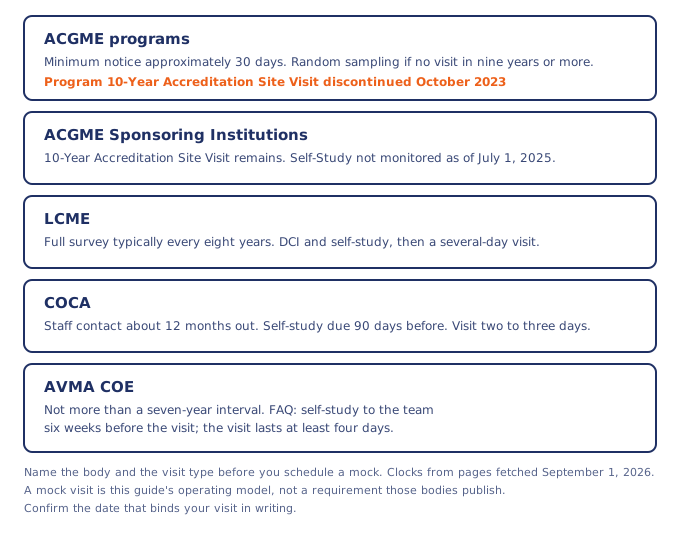
If you cannot name the body and the visit type (program vs Sponsoring Institution; comprehensive vs focused; full survey vs random sample), you do not yet have a mock to schedule.
What to freeze
A mock visit rehearses the packet the surveyors will hold. If you keep editing after freeze, you are rehearsing a different program than the one they will review.
| Body | Frozen artifact | Freeze clock |
|---|---|---|
| ACGME | ADS updates plus the announcement-letter document list, and a signed Site Visit Attestation Statement | Due date indicated in the Field Activities Site Visit Announcement letter |
| LCME | DCI/self-study as submitted, plus the ISA that was incorporated into that submission | After submission; before the survey visit |
| COCA | Self-study filed in the electronic accreditation system | No later than 90 days before the site visit begins |
| AVMA COE | Self-study sent to the site team | FAQ: no later than six weeks before the visit; confirm in writing |
ACGME. The due date for updates to ADS is indicated in the Field Activities Site Visit Announcement letter. Failure to update the ADS information may result in a postponement of the site visit and assessment of a $3,200 fine. Document lists appear as in that announcement letter; the published list (footer 03/2022) is a starting inventory the ACGME may update. For programs on Continued Accreditation statuses, that inventory includes program letters of agreement, resident and fellow files (completed evaluations, not blank templates), an example of competency-based goals and objectives, the conference schedule, a completed faculty evaluation by residents and fellows, program-specific policies, a sample of work hour report data (minimum six months), and a list of resident and fellow quality-improvement activities. Sponsoring Institution visits have their own written-policy and appointment-agreement list. Program Letters of Agreement were removed as a required upload as of July 1, 2026 for Program Initial Accreditation statuses; do not freeze last year's upload list. All Sponsoring Institutions and programs must upload a signed Site Visit Attestation Statement prior to the visit.
LCME. Freeze the DCI/self-study as submitted, plus the ISA that was incorporated into that submission. A mock that interviews against a later draft of the DCI is a rehearsal of a document the survey team does not have.
COCA. Freeze the self-study that went in no later than 90 days before the visit. Clarifying materials requested two weeks out are a named exception; anything else offered on site needs Team Chair approval. Do not treat the mock as a chance to slip new PDFs into the room.
AVMA COE. Freeze the self-study that went to the site team. Appendix I is the rubric the comprehensive visit uses. Plans, unfinished renovations, and projected purchases are not current conditions; do not rehearse them as if they were.
Goals and Outcomes
Needs your attention
Showing top 2 by due dateRequired evidence not linked
Program director · Sep 5, 2026
Unanswered required questions
Unassigned owner · Sep 8, 2026
AY 2026-2027 Annual Program Evaluation
Complete outcomes, evidence, metrics, requests, and action planning before submitting the packet for review.
Improvement goals
8
Open blockers
2
Open actions
5
Overdue actions
1
Demonstration data. Packet artifacts live in one access-controlled repository, linked to the standard they support.
The freeze is a packet, not a folder. Medtrics keeps every accreditation artifact in one access-controlled repository, categorized, with expiration alerts, and links each artifact as evidence to the standard it supports.
How the rehearsal runs
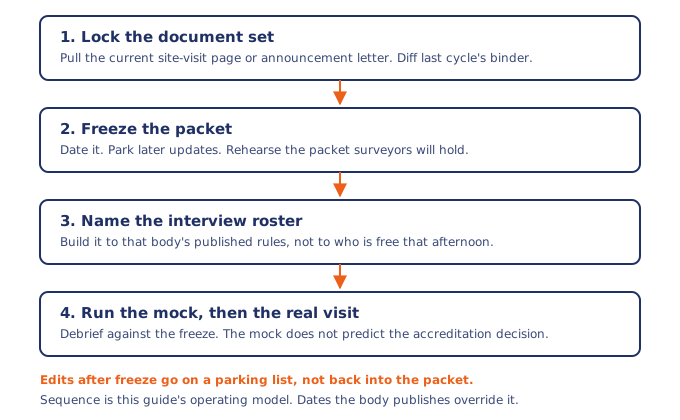
This sequence is this guide's own operating model. It is not a published accreditor requirement. Put the body's dates in the tracker first; they override everything here.
- Lock the document set. Pull the current site-visit page, announcement letter, or policies manual. Diff it against the last mock's binder. Last cycle's list is a clue, not the list.
- Freeze the packet. Date it. Tell element owners the freeze is real. Park later updates.
- Build the interview roster to the body's rules. ACGME program visits: program director, program coordinator, DIO and/or chair (or representative), faculty members, and residents and fellows. For small programs, Field Representatives interview all residents and fellows on duty that day; for larger programs, peer-selected representatives from all required years. Learners beyond the required years of residency (for example, a fourth-year internal medicine chief) may not participate in the resident and fellow interview. Combined-program tracks need representative residents from the combined program in the interview. Institutional visits add GMEC members, other senior institutional officials, and residents and fellows representative of the programs sponsored. COCA and AVMA COE visits include students; LCME survey visits do too. Do not hand-pick only the most polished speakers.
- Run the day on the real agenda shape. Opening with the director or dean, document review, interviews, a closing clarification. For some ACGME specialties, or if there were prior citations related to facilities, Field Representatives may tour selected clinical facilities. AVMA COE visits include facility inspection. Remote ACGME visits are on Zoom unless the institution cannot access it; the ACGME, not the program, chooses in-person or remote.
- Debrief against the frozen packet, not against vibes. Every finding is either a packet contradiction, a missing document from the published list, an interview rule break, or a logistics miss. Assign an owner and a due date. The mock does not predict the accreditation decision. ACGME Field Representatives will not offer predictions regarding accreditation or recognition outcomes either; neither should your mock team.
A 30-second check. Open the announcement letter or the body's current site-visit page. Write the freeze date and the visit type on the first row of the checklist. If you cannot fill those two cells, you are not ready to invite interviewees.
Where it fails
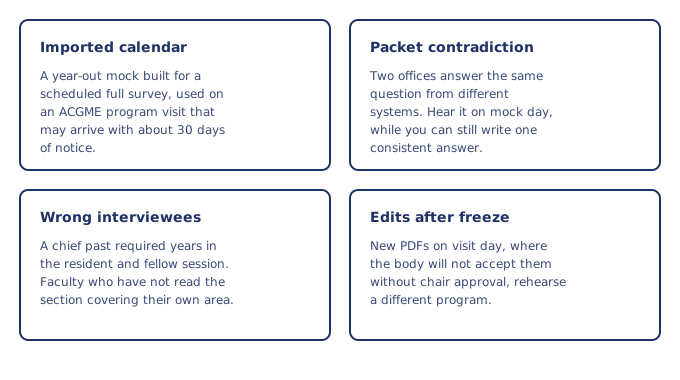
The failure points below are the ones that show up on mock day, cost the most to fix after freeze, and are cheapest to prevent when you still own the calendar.
- The imported calendar. A GME coordinator running an LCME-style "year-out" mock for an ACGME program visit that may arrive with approximately 30 days of notice. Cheap fix: name the body on row one.
- Answers that contradict the frozen packet. Two offices answer the same question from different systems. The mock's job is to hear that contradiction while you can still write a consistent answer, or to stop editing so the interview matches what was submitted.
- The wrong people in the room. A chief past the required years in the resident and fellow session. A student the dean selected instead of a peer-selected or student-led group. Faculty who have not read the section about their own area.
- Documents swapped after freeze. Especially COCA, where no materials will be accepted during a site visit without Team Chair approval, and ACGME, where ADS has a due date and a $3,200 fine for missing it.
- Rehearsing the retired Self-Study. An ACGME program mock still built around a 10-Year Accreditation Site Visit packet. That visit was discontinued in October 2023. Rehearse the announcement-letter list in front of you.
- Single-person knowledge. The last mock lived in one coordinator's inbox. Turnover should cost you a person, never the freeze date, the roster, or the debrief.
The checklist
Download the mock site-visit checklist (Excel), or the plain CSV if you would rather import it into Google Sheets or your own tracker: every task above as a row, grouped by phase, with columns for the suggested owner, timing relative to your body's clock, status, and notes. The workbook is a handoff for a meeting (names and dates in a file you can pass around). It is not the system of record. Put real names in the owner column at your next leadership meeting. Pick the body first. The dates that body publishes override the suggested timing.
CCNE, ACEN, and other bodies not fetched for this guide are out of scope. Do not stretch this protocol onto a survey page you have not opened.
Where a platform fits
Named freeze owners lock the packet as a standing process: people first, then a written freeze date, then a platform that keeps that packet from going stale when a coordinator leaves.
The checklist above is a meeting handoff. The packet that lives in one inbox is the records problem this page is about. For ACGME program visits, see GME Leaders.
None of this replaces the protocol. The body, the freeze, the roster, and the dean's or DIO's sponsorship still do the work. A platform makes the boring structure durable when people leave. Nothing here files, certifies, or confers accreditation, and nothing here predicts a site-visit result.
Sources and status
This guide was verified against the following primary site-visit and survey pages, each fetched on September 1, 2026:
- ACGME Site Visit FAQ: visit types, approximately 30 days minimum notice, random sampling eligibility (no visit in nine years or more), who should be present, resident and fellow interview rules, ADS update, attestation, no outcome predictions, July 1, 2025 Self-Study monitoring change, October 2023 discontinuation of the program 10-Year Accreditation Site Visit. acgme.org/programs-and-institutions/programs/site-visit
- ACGME ADS-update checklist (6/2026) and document list (03/2022): freeze due date, $3,200 fine, status-specific uploads, July 1, 2026 PLA change for Initial Accreditation. checklist · document list
- ACGME October 30, 2023 e-Communication and Help Center article (updated February 27, 2025): program 10-Year visits discontinued. e-Communication · Help Center
- ACGME Institutional Requirements (2026 posting): Institutional Requirement 1.5 still printed as Core. 2026 IR PDF
- COCA Policies and Procedures (Rev 2026) and site-visits page: 12-month contact, 90-day self-study, 60-day team receipt, two-week clarifying materials, no on-site materials without Team Chair approval. P&P · site visits
- AVMA COE FAQs, P&P index, and Appendix I (July 2025): not more than a seven-year interval, self-study to the team no later than six weeks before (FAQ), visit lasts at least four days, snapshot rubric. FAQs · P&P index · Appendix I
- LCME publications page (March 9, 2026 navigation change), homepage (Secretariat survey-prep webinars), February 19, 2026 ISA webinar, and LCME-hosted Academic Medicine article (typical full survey every eight years; DCI plus self-study; several-day visit). publications · lcme.org · ISA webinar · hosted article
A mock visit is this guide's own operating model, not a requirement any of those bodies publishes. Whatever this page says, the authoritative version of every survey rule is the current page or manual on that body's site, not any article, including this one.
LCME, ACGME, COCA, AOA, and AVMA COE are named descriptively. This article is an independent operational guide from Medtrics, not guidance from any of those bodies, and no process described here promises any accreditation outcome. The work does that, or nothing does.